
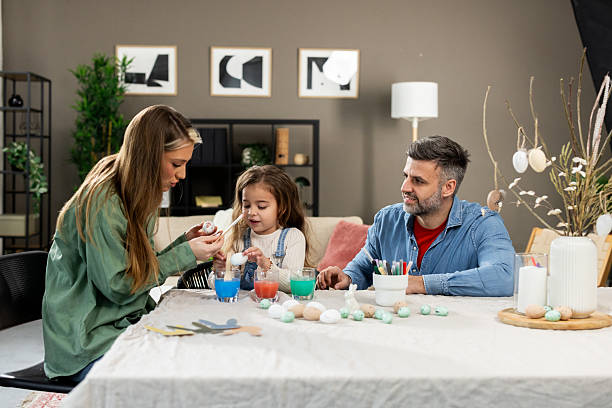
Structured lessons are important, but meaningful education often extends beyond textbooks. Well-designed kids learning activities help children develop critical thinking, creativity, communication skills, and emotional intelligence. Whether implemented at home or in school, these activities create engaging learning experiences that support academic growth and holistic development.
Parents and educators increasingly recognise that experiential learning strengthens understanding and retention. Many institutions—including reputed best schools in Bangalore—integrate activity-based approaches into their curriculum to encourage deeper engagement.
Below are 20 creative and practical kids learning activities that can be implemented both at home and in classroom environments.
Language and Literacy Activities
1. Story Building Circle
Children sit in a circle, and each child adds one sentence to create a collaborative story.
Skills developed: Vocabulary, creativity, listening, sequencing.
This activity enhances narrative skills and encourages teamwork.
2. Reading Treasure Hunt
Hide written clues around the house or classroom. Each clue leads to the next.
Skills developed: Reading comprehension, logical thinking.
Children practice decoding and understanding written instructions in a fun setting.
3. Word of the Day Journal
Introduce a new word daily and ask children to use it in sentences or short paragraphs.
Skills developed: Vocabulary expansion, writing fluency.
Consistent practice improves language confidence.
4. Role-Play Conversations
Students enact real-life scenarios such as interviews, market visits, or storytelling sessions.
Skills developed: Communication, confidence, empathy.
Many top schools in Bangalore use role-play to enhance expressive skills and social awareness.
Mathematics and Logical Thinking Activities
5. Math Through Cooking
Involve children in measuring ingredients while cooking.
Skills developed: Fractions, measurement, practical application of math concepts.
Real-world math builds conceptual clarity.
6. DIY Board Games
Ask children to create simple math-based board games.
Skills developed: Addition, subtraction, multiplication, strategic thinking.
Designing the game itself reinforces understanding.
7. Puzzle Challenges
Provide age-appropriate puzzles such as Sudoku, logic grids, or pattern blocks.
Skills developed: Analytical thinking, problem-solving, concentration.
8. Budget Planning Activity
Give children a fictional budget and ask them to plan a small event or shopping list.
Skills developed: Financial literacy, planning, arithmetic application.
Science and Discovery Activities
9. Mini Science Experiments
Simple experiments such as making a volcano model or observing plant growth.
Skills developed: Observation, hypothesis formation, scientific reasoning.
These hands-on activities make abstract concepts tangible.
10. Nature Exploration Journal
Encourage children to document plants, insects, or weather changes in a journal.
Skills developed: Environmental awareness, documentation skills.
Schools focused on experiential learning—like many best schools in Whitefield—often incorporate nature-based projects.
11. Recycling Craft Projects
Create useful objects from recyclable materials.
Skills developed: Creativity, environmental responsibility, design thinking.
12. Shadow and Light Experiment
Explore how shadows change throughout the day.
Skills developed: Scientific observation, understanding of light and time concepts.
Creative and Artistic Activities
13. DIY Art Exhibition
Children create artwork and present it in a mini exhibition.
Skills developed: Creativity, presentation skills, self-expression.
14. Music and Rhythm Games
Clap or tap rhythmic patterns and ask children to replicate them.
Skills developed: Memory, coordination, auditory skills.
15. Creative Writing Prompts
Provide imaginative prompts such as “A day on another planet.”
Skills developed: Creative thinking, descriptive writing.
Social and Emotional Learning Activities
16. Gratitude Circle
Children share one thing they are grateful for each day.
Skills developed: Emotional awareness, positive thinking.
17. Team Building Challenges
Organise small group challenges that require cooperation.
Skills developed: Collaboration, leadership, problem-solving.
Institutions such as best IB schools in Bangalore emphasise collaborative learning to build global competencies.
18. Community Helper Project
Research different community roles and present findings.
Skills developed: Civic awareness, communication, empathy.
Physical and Kinesthetic Learning Activities
19. Alphabet or Number Hopscotch
Create hopscotch patterns using letters or numbers.
Skills developed: Coordination, number/letter recognition, memory.
20. Obstacle Course with Learning Stations
Set up stations that require solving a question before moving ahead.
Skills developed: Physical fitness, quick thinking, active learning.
Why Kids Learning Activities Are Important
Well-structured kids learning activities enhance academic development by connecting theory to practice. They:
- Improve knowledge retention
- Strengthen cognitive skills
- Encourage creativity
- Build social competence
- Promote independent learning
Activity-based education also reduces learning anxiety by making lessons interactive and enjoyable.
Role of Schools and Parents in Activity-Based Learning
Both schools and families contribute to creating enriching learning environments. Schools provide structured opportunities through project-based learning, clubs, and collaborative assignments. At home, parents can reinforce these experiences through consistent engagement and encouragement.
Activity-based learning is not about replacing formal instruction but complementing it with meaningful, real-world experiences.
Conclusion
Incorporating creative kids learning activities at home and in school nurtures curiosity, confidence, and holistic growth. From literacy games to science experiments and collaborative challenges, these activities strengthen foundational skills while making learning enjoyable.
When children engage actively with concepts rather than passively absorbing information, they develop deeper understanding and lifelong learning habits. By thoughtfully integrating structured activities into daily routines, parents and educators can create enriching educational experiences that support both academic excellence and personal development.
FAQs
- Why are kids learning activities important?
They enhance engagement, improve retention, and support holistic skill development. - Can these activities be adapted for different age groups?
Yes, activities can be modified in complexity to suit various developmental stages. - How often should children participate in learning activities?
Short, consistent sessions several times a week are effective. - Do learning activities replace classroom teaching?
No, they complement formal instruction by reinforcing concepts practically. - Are activity-based methods effective for academic improvement?
Yes, experiential learning strengthens understanding and application of concepts.